Fire for the Rest of Us
Same gatekeeper discipline that keeps agents trusted on aircraft: give context, set boundaries, check the work, keep what matches. It works on an inbox too.
In the myth, fire belonged to the gods. Prometheus stole it and gave it to people, and everything downstream of warmth, cooking, metal, and light followed from that one act. The story was always about who got to hold the flame.

I keep coming back to that myth, because AI is the most fire-like thing I have witnessed in my lifetime. I mean something specific: a capability that used to belong to a small priesthood is now in ordinary hands, and the people holding it are about to do things no one planned for.
The fire is agency
For most of computing history, turning an idea into working software required a guild. You needed years of training, or the money to hire people who had it. Ideas were cheap. The expensive part was the distance between having one and being allowed to build it.
That distance is collapsing. With an agent, someone who has never written a line of code can describe what they want and watch it get built. Not a toy. A real thing that runs.
Speed is the obvious part. Agency is the permission to try.
What the coders figured out first
Developers got there first, because code gives the fastest feedback loop on Earth. In early 2025 Andrej Karpathy named the new way of working "vibe coding": describe what you want in plain language, let the agent write it, steer by results. Within a year it was the Collins Dictionary Word of the Year.
Then Gene Kim and Steve Yegge wrote the book on doing it well, and gave the payoff an acronym: FAAFO. It is a wink at the old "find out the hard way" meme, turned into something useful. It stands for Fast, Ambitious, Autonomous, Fun, Optionality. You move faster. You attempt bigger things. You do alone what used to take a team. You enjoy it. And instead of betting everything on one approach, you try five and keep the one that works.
When the cost of trying drops to near zero, the question stops being "are you allowed to build this?" and becomes "what do you actually want to make?"
Look at that list. Fast, ambitious, autonomous, fun, optionality. None of those words require a compiler. They describe what changes when a tireless, capable partner sits next to you and trying something stops being expensive.
I took it out of the editor
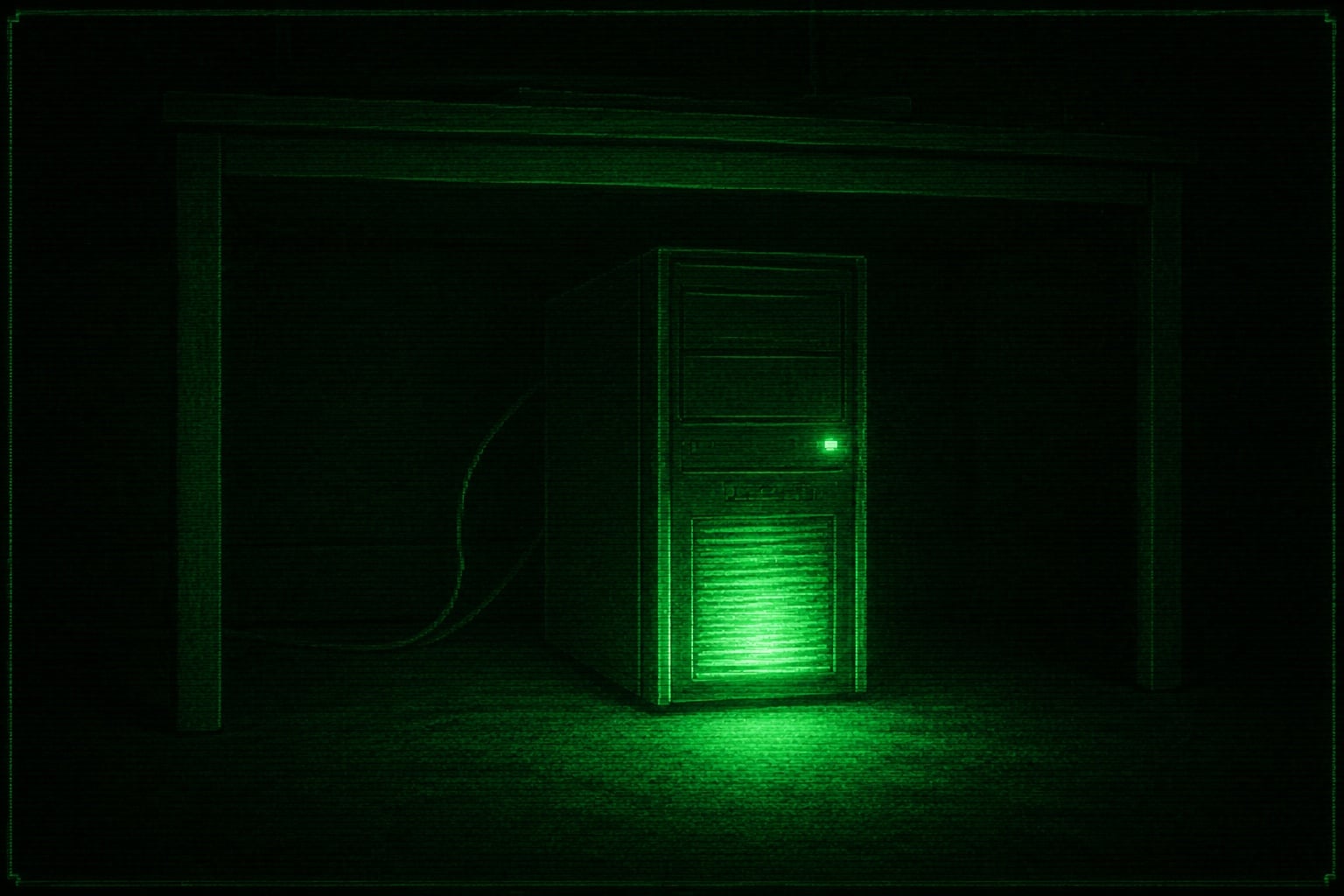
That is the moment it clicked for me. I get FAAFO at work every day: I help build defense autonomy, where the agents fly real aircraft.
I was an ok coder, nothing special. That is the point. The same craft took a tower box humming under my desk, running a model on hardware I could reach down and touch, and carried me up to running the same kind of AI on locked-down government networks that never touch the internet, reliably enough to be trusted with national-security work. I used it to accelerate my education, to break into selling AI and machine-learning capabilities to the government alongside the engineers building them, and, honestly, to help land the job itself. I was never the smartest person in the room. I ran the craft, and I still get the aiming wrong.
Then I pointed it at the ordinary stuff: what I wanted to learn next, the household paperwork, the money questions, the decisions I kept putting off.
Take the inbox. Not "help me get organized." Pick one stuck pile of household paperwork and run it like this:
- Context. Paste the actual email threads, PDF names, due dates, and account numbers you already have. The agent only knows what you put in front of it.
- Boundaries. Draft only. No sending. No payments. No touching money or passwords. Anything that cannot be undone stays in your hands.
- Check. Read every claim against the source documents. The calm voice is not evidence.
- Keep / drop. Keep the calendar holds and the three action items that match the PDFs. Drop the confident summary that invented a deadline that was never in the mail.
That is the whole craft, run once, on something you can see. Same shape whether the agent is flying an aircraft or sorting your mail.
I learned the hard part the cheap way first. The week I first measured coding agents, 18% of tasks needed a second pass. Same failure mode shows up when you are not writing code: the answer looks finished and is not. Early on, pointing this at learning, I felt clever. An infinitely patient teacher walked me through something I had been stuck on for years, in one sitting, and I almost took the whole answer as gospel because it felt like the tutor I had always wanted. Then I checked one claim against a source. Cleanly wrong, said in the same calm voice as the true parts. That is where fire bit me. Confidence is free. Verification is the job.
It works. Not magically, and never without that check, but the leverage developers have been quietly enjoying is available to anyone willing to run those four steps.
Learning is still where I feel it most. I have explored and built things I dreamed about for years, because for the first time I had a teacher that explains anything, as many times as I need, without ever making me feel slow. It does not know everything, and it gets plenty wrong. What it does is meet you exactly where you are and walk forward from there, as many times as you need, while you keep your hand on the gate.
My own career and life bent for the better around this. That is just what happened, and it is why I write it down.
Fire burns

The myth gets one thing right that the hype skips: fire is dangerous. The same flame that cooks dinner burns the house down. The same agent that drafts your email can confidently do the wrong thing, leak what it should not, or get steered by someone trying to fool the person holding it.
So the leverage comes with a craft, and most of that craft is safety. Let it do the thinking. Keep your hand on anything it cannot take back: your money, your passwords, anything that cannot be undone. Treat every urgent demand as something to verify before you act on it. That discipline is the part of my day job that matters most here, and it transfers cleanly. The people who benefit from this fire are the ones who learn to hold it. Handing someone fire without teaching them the check is negligence dressed as generosity.
Why I am writing this down
The story we keep telling about AI is either doom or productivity charts. Both skip the human thing in the middle: a kind of power that was locked in a temple is loose in the world, and ordinary people can pick it up.
The playbook the coders found is learnable, and it was never really about coding. I went to the frontier for my job, I have spent a long while translating that playbook out of code and into ordinary life, and the most useful thing I can do now is hand it down, carefully, to people who were never supposed to get near it.
The fire is already out of the temple. Who gets to hold it is still open.
I think the answer is everyone.
Related
- The Gutenberg Moment for Code: the industrial side of this shift, with the numbers
- AI Partner: how I take the same playbook to people who are not developers, set up safely
- Vibe Coding by Gene Kim and Steve Yegge: where FAAFO comes from